
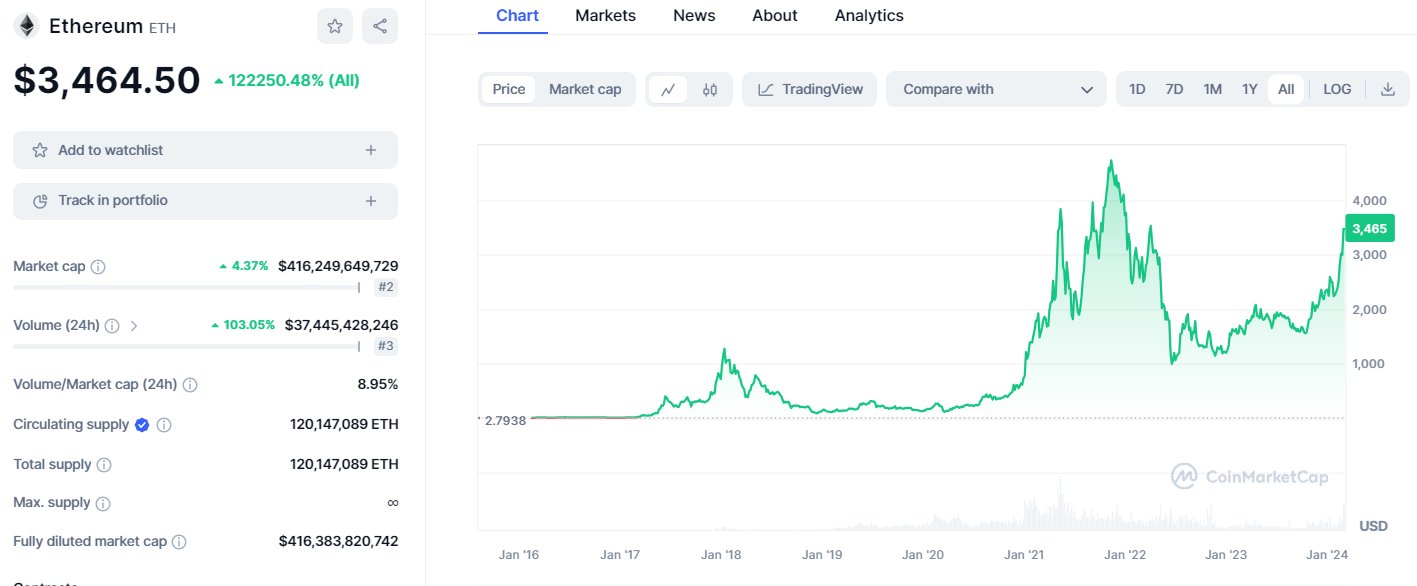
I know that some of you don’t want to hear this…but I have to tell you that crypto is back.
It is my job to follow the data and trends in finance and explain what is going on to my financial coaching clients.
It is not my job to push product. I don’t believe in just one asset class. There are no “good” or “bad “asset classes, there are just different tools for different jobs.
The right price can make any asset class a good opportunity and the wrong price can make any investment a bad one.
I do like to think of low cost equity index funds as the healthy “base layer” of a portfolio…just as whole foods (fruit, vegetables, meat, fish, nuts etc) should be the healthy base layer of your diet.
But there is still room for the occasional deviation from a strict diet. Everything in moderation.

Question: What do Bogleheads and Bitcoin Maximalists have in common?
Answer: They are both financial cults.
Bogleheads are proponents of low cost buy & hold equity index investing. They (or rather we) believe in dollar cost averaging into index funds and holding forever. Their founder-leader was Jack Bogle, who started Vanguard, the index-investment manager.
Bitcoin Maximalists are proponents of Bitcoin as the one true cryptocurrency that will replace much-despised fiat currencies (e.g. $/£/€) with the libertarian dream of hard money that can not be printed and manipulated by governments.
Ironically, both these cults kinda have a point…even if membership of the 2 groups is mutually exclusive.
If I had to choose a financial cult, I would join the Bogleheads.
Most investors are best served with a low cost global equities index tracker as the foundation layer of their portfolio.
Global equities are the best game in town for the long term investor. Check out the Vanguard Global All Cap Index Fund or VWRL or VEVE or something like that. Dollar cost average into the stockmarket every month, ignore the predictions (including mine…see below!) and hold forever.
A cult is a group or tribe of people bound together by a set of beliefs that members “sign up” to.
A cult can be religious, political or ideological. The internet now allows almost any belief system to form, self-organise and get a cult following.
Here are the characteristics of any cult :
- a charismatic leader
- a set of beliefs explained with a specialised vocabulary
- a status hierarchy with levels of achievement
- a sacred text
- expulsion of apostates
- aggression against “near-believers” (‘this is the temple I do NOT belong to)
- arcane rituals
It is interesting that cults focus most of their energy on near-believers rather than non-believers.
A near-believer is a threat if they take other cult members with them and away from the cult. A near-believer is more likely to be capable of bring turned and bullied back into the fold. A non-believer is less of a threat and not worth as much attention.
When I started writing about financial independence in 2014, I hadn’t realised that I’d joined a cult.
There wasn’t an application form and there wasn’t a government health warning anywhere in sight.
I only found out that I’d joined a cult when I got feedback from the internet. It turned out that I was only “allowed to” write about some things and not others.
The Bogleheads were not happy when I started writing about crypto.

Here some nuance is required.
It is perfectly correct to say that crypto prices exhibit extreme volatility with booms and busts and crazy risk taking by inexperienced / greedy / naive participants.
But that does not mean nothing of substance is being built in crypto. Crypto financial applications run on software and no one would say that software companies such as Oracle, Microsoft, Google etc have no value because they “only” create software rather than physical products.
I went deep down the crypto rabbit hole in 2021 and found that what was at the bottom was much more interesting than just a speculative frenzy.
Contrary to first appearances, crypto does offer the ability to invest in productive assets. And it’s possible to be a sensible long term buy and hold investor in crypto.
But to do this, you need to:
- have a target asset allocation and “ring fence” part of your portfolio
- understand what you are doing
- have conviction to ride the extreme volatility (and not get shaken out)
- have an investment timeframe and exit trigger(s)
Crypto is a hard asset class to own…even when you get the asset selection right.
Ironically, owning some crypto made me a better equities investor as it increased my psychological ability to tolerate big drawdowns.
In the stockmarket, when there’s a 30% fall they call it “Black Monday” or something equally dramatic. In crypto, it’s just Monday.
In the next few years we may see The Mother of All Bull Markets and a full scale bubble high beta risk assets. This includes tech stocks, the NASDAQ, venture capital and crypto.
This is partly due to the long term secular trend of technology adoption and the convergence of new technologies including robotics, AI, bio-tech, green tech as well as crypto.
But it’s also cyclical. There will be a boom stoked as interest rates come down this year.
If I’m right, crypto will act as the tip of the spear, a lead indicator for all risk assets. BTC is already up > 300% from the cyclical lows around 1 January 2023.
If so, we will see The Mother of All Bubbles as flows from institutional investors follow ETF approvals in the USA, investment committees see “number go up” and pile in. This is how institutional adoption works; no one wants to be first, but no one wants to be last.
Retail investors will then FOMO in and go full “degen”. It won’t always be pretty (although it will be entertaining).

There will be pumps, scams, protocol hacks and blowups. Most new tokens will get hyped and then fade away to nothing.
The reaction to this will be telling.
I remember the howls of cognitive dissonance from the last crypto bull cycle.
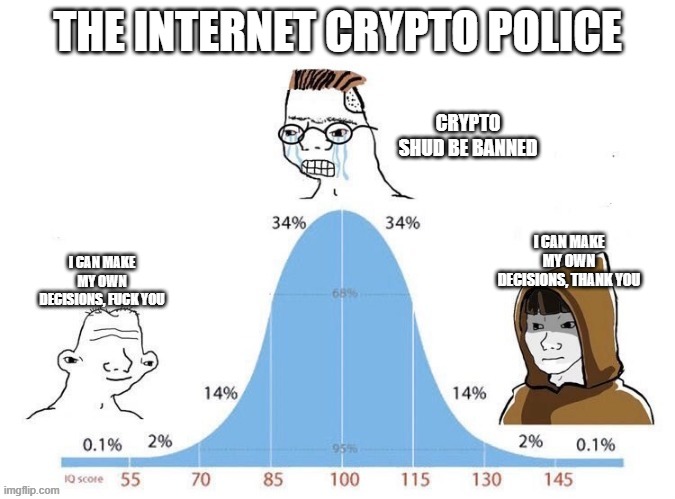
If your financial adviser or favourite financial influencer tells you that they just don’t understand crypto, you should listen to them.
They are not telling you anything about crypto, they are telling you that they haven’t done their homework.
Isn’t it their job to understand different asset classes, new systems of money and new developments in finance?
If they can’t explain the pros and cons, then they only understand one side of the argument. And if they can’t make the argument for both sides of the case for any asset class, they are not much of an adviser.
It is not enough to say that “crypto is stupid”. Go listen to Naval Ravikant or Balaji Srinivasan and then tell me that they are stupid.
No one that smart ever went down the rabbit hole, did their homework and came up saying “nah, its tulips all the way down”.
It is absolutely fine to steer clear of crypto. For most people, it’s probably too risky, too volatile and too complicated.
Even for the financially sophisticated, it’s a difficult asset class to own through the insane volatility and the fog of competing narratives. If you do choose to own it, it’s best limited to the infotainment section of your portfolio.
My message to crypto-sceptic financial advisers and would-be influencers is just don’t hate on things that you don’t (yet) understand.
It’s okay to change your mind. Mea culpa: I was late to crypto because what I saw at the top of the rabbit hole (a speculative frenzy) put me off.
But the fact that a bunch of idiot speculators went to California in the gold rush of 1848 did not mean that gold has no value!
Love to everyone
Barney
New articles appear first on my Substack : https://theescapeartist1.substack.com/
If you’d like to discuss career coaching or financial coaching, please set up an introductory call with me here.

 The Escape Artist
Great article! Thank you!
Owning crypto also made me a better Index investor.
Having read about modern portfolio theory, what convinced me to risk some of my money into this emerging asset class was the low and sometimes negative correlation with the rest of the highly correlated asset classes.
The issue I have with crypto, particularly in the UK, is the tax implications – some accountants won’t touch you, some conveyancers won’t touch you, and good luck as an average bear being able to understand HMRCs rules.
I’d rather have a bank account that paid me 0% interest and only earn anything in a pension or an ISA if (as it does currently) it meant I never have to deal with HMRC again.
Lol, that’s complicated for you sir,I can teach you better okay, just step by step to understand it and be a good investor